TL;DR
- An indoor panel turns gray in Florida daylight. Outdoor walls use panels made for the sun, and the direction the wall faces matters as much as the panel.
- Rain and humidity reach the back of the wall, the cables and the processor as well as the face. Ask what is rated and what gets covered.
- A big wall catches wind like a sail. It needs a rigger's plan for ground support or for hanging it, decided before the show.
- The National Weather Service says no place outside is safe once you hear thunder. Agree on who calls the hold and when the show restarts.
Most guides to an outdoor LED wall rental in Florida stop at "get a brighter screen." Brightness is only the first problem. The same afternoon can bring hard sun on the panels, a sea breeze that turns into a gust front, a shower, thunder within earshot, and a crew working in heat that hangs on long after dark.
We are a family owned production company based in Miami, and our crews build outdoor walls over festival stages, beside hotel pools and on lawns across South Florida. Our LED Video Walls page covers what an outdoor wall is. This guide goes one level down: what each kind of weather does to it, what the standard practice is, and what to ask.
Why Does an Indoor LED Wall Wash Out in the Florida Sun?
An indoor panel is built to look right in a ballroom, so outside at noon the sun simply out shines it and the picture goes flat and gray. Outdoor panels push far more light from every pixel so the image holds up against the sky.
The catch is that a panel bright enough for one o'clock is far too bright at nine at night. A good outdoor wall gets turned down as the sun sets, both so guests are not squinting and so photos of the stage do not blow out. Ask who adjusts it during the show.
This is also why a projector rarely works outdoors before dark. A projector throws light onto a screen, and the sun lights that same screen far more strongly. If your program starts in daylight, a wall is usually the only option that reads. We go through that choice indoors in our post on an LED wall or a projector for a corporate event.
Can an Outdoor LED Wall Run in the Rain?
Outdoor panels are sealed against water, but a wall is more than its face. Rain blown sideways, a dripping stage roof and the humidity of a July night all find the back of the cabinets, the cable joints, the processor and the power boxes.
Panel makers describe sealing with an IP rating. As LED maker ROE Visual explains, the first number is protection from dust and the second is protection from water, and higher is better. Their guidance for screens used outdoors is a rating of IP65 or higher. Two details matter more than the number itself:
- Front and back. Some cabinets are sealed better on the face than on the rear. Ask about both.
- Everything behind the wall. The processor, playback computer and power distribution are usually not sealed at all. They need a dry, raised spot under cover.
- Condensation. Gear that sat in a cold truck and then meets a humid evening can sweat inside. Building early gives it time to settle before it powers up.
On the night, the question is who decides whether the wall keeps running, gets covered or goes dark, and what plays on it while it is down.
 Google review
“Last night we had the time of our lives!! SOFLO events made the Quienceanera event spectacular!! The people who helped in the event were sooo friendly and helpful! The lights and dj was out of this world,thank you all for making this event of my family turn out so beautiful even with the bad weather. It was so good so no body noticed it was bad weather!! Thank you sooooo much!!”
How Is an Outdoor LED Wall Held Down Against Wind?
A wall is a flat, heavy sheet standing in the open, and wind treats it like a sail. ROE Visual's guide makes three points every host should hear: wind comes in gusts that make a hung screen sway, wind force grows the higher the wall goes, and open flat ground such as a beach sees stronger wind than a street of buildings.
There are two common ways to hold a wall up outside:
- Ground support. The wall stands on its own frame of truss with bracing behind it and heavy ballast at the base, so it cannot tip or slide.
- Flown. The wall hangs from a stage roof or a truss grid, the way it does over a festival stage. The roof then has to be rated for the wall plus the wind on it.
The same guide notes that a large screen cannot be taken down in the fifteen minutes usually allowed when wind picks up, so it has to be built to stay up through the worst gusts expected. It also says this is a job for a rigger or a structural engineer, not the video tech alone. If your wall goes on a mobile stage or on a deck from our event staging and custom platforms service, the stage and the wall are planned as one structure.
What Do Our Outdoor Walls Look Like on a Real Stage?
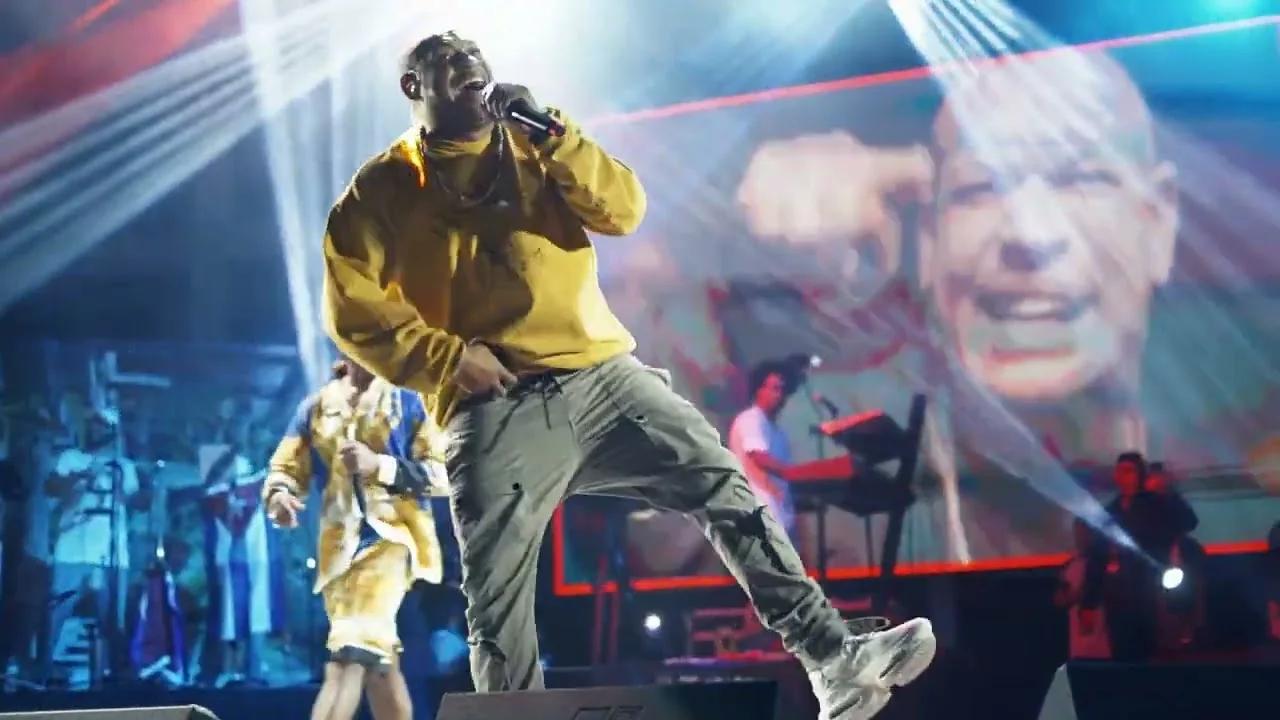
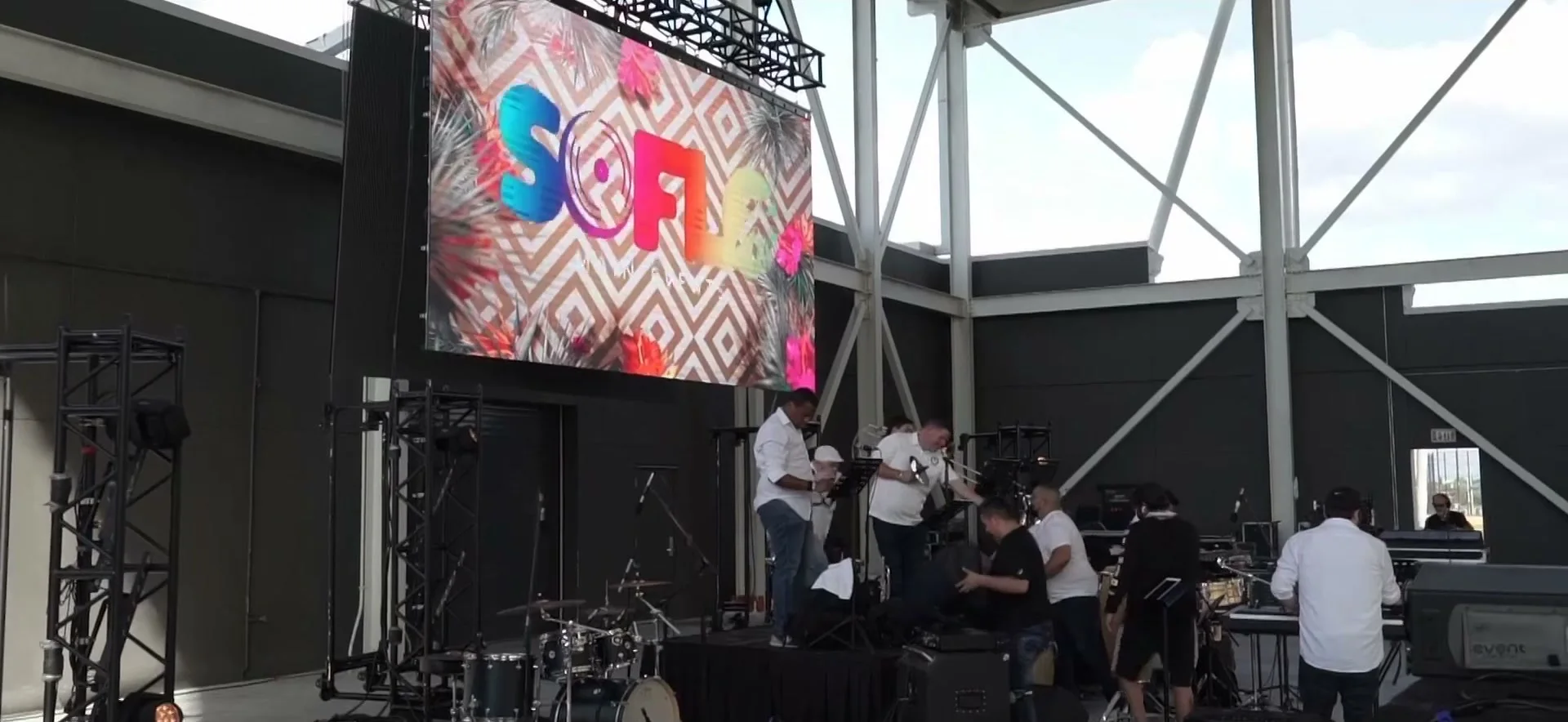
Two shows from our own YouTube channel, both in Miramar, show the setup most festivals use: a wall hung over the band, under a roof, open to the air on the sides.
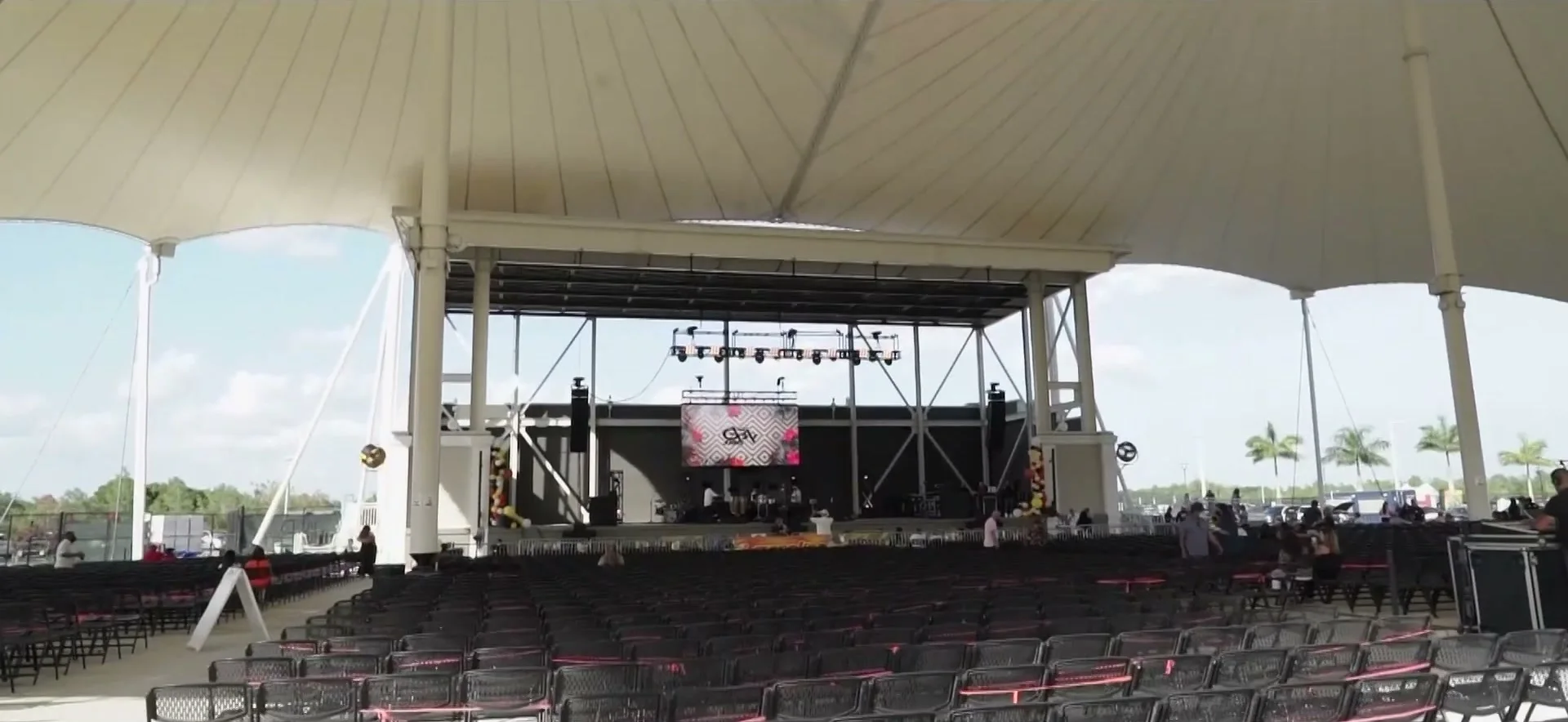
At Festival De La Zalsa, where we ran all the lighting, audio and video at the Miramar Regional Park Amphitheater, our footage shows the band at soundcheck in full daylight under a wall hung from truss, the stage roof above it and the sky visible through the open sides. The view from the seats shows how far back the crowd sits under the canopy, which is what the wall has to reach. After dark the same wall runs behind the band while spark fountains fire at the front of the stage.
At the Yotuel concert in Miramar, our video shows the wall behind the singers at dusk under a tent roof, carrying a live camera close up of the performers so the back rows can see faces. A roof keeps direct rain off the panels. It does not stop wind blowing through the sides, and it is not a lightning shelter.
When Do Crews Stop for Lightning?
When thunder is heard. The National Weather Service is blunt about it: its lightning tips say no place outside is safe when thunderstorms are in the area, and that if you can hear thunder, lightning is close enough to strike you. Its slogan is "When Thunder Roars, Go Indoors."
The same page says to move to a substantial building or a closed vehicle with a metal roof, and to stay there at least 30 minutes after the last thunder. A stage roof, a tent and the space behind a video wall are none of those things. For an outdoor show, that means:
- Crew stop climbing, rigging and cable work on the wall as soon as thunder is heard.
- Someone named in advance makes the call, and the venue, the promoter and the crew all know who it is.
- Guests have a real building or their cars to go to, and the announcement is ready before it is needed.
- The restart waits out the full 30 minutes, then the wall gets a check before it powers back up.
The National Weather Service also offers lightning safety toolkits for venues and organizations that want a written plan. If your venue already has one, send it to us with the quote request.
When Do Summer Storms Hit South Florida?
Almost every day in the wet season. The National Weather Service office in Miami sets the South Florida wet season from May 15 to October 15, with showers and thunderstorms building nearly daily. It calls mid May through early July the stormiest stretch, when damaging wind, heavy lightning and hail are most likely. The Tampa Bay office notes that the daily sea breeze drives Florida's thunderstorm season.
The National Hurricane Center puts the Atlantic hurricane season at June 1 to November 30, with the peak around September 10 and most activity from mid August to mid October.
For a summer date, plan as if a storm will pass through in the afternoon. In practice that means building and testing the wall early, keeping a dry place ready for the processor and playback, holding a clear point in the schedule to decide go or wait, and having a weather date or an indoor fallback written into the plan for a tropical system.
What Does Salt Air Do to a Wall on the Beach?
Salt spray settles on everything near the water: panel faces, locking hardware, connectors and truss. Over one night it mostly means a film to wipe off. The bigger beach problems are wind, which ROE Visual says runs stronger over open flat ground, and sand, which is hard to ballast on and gets into every connector.
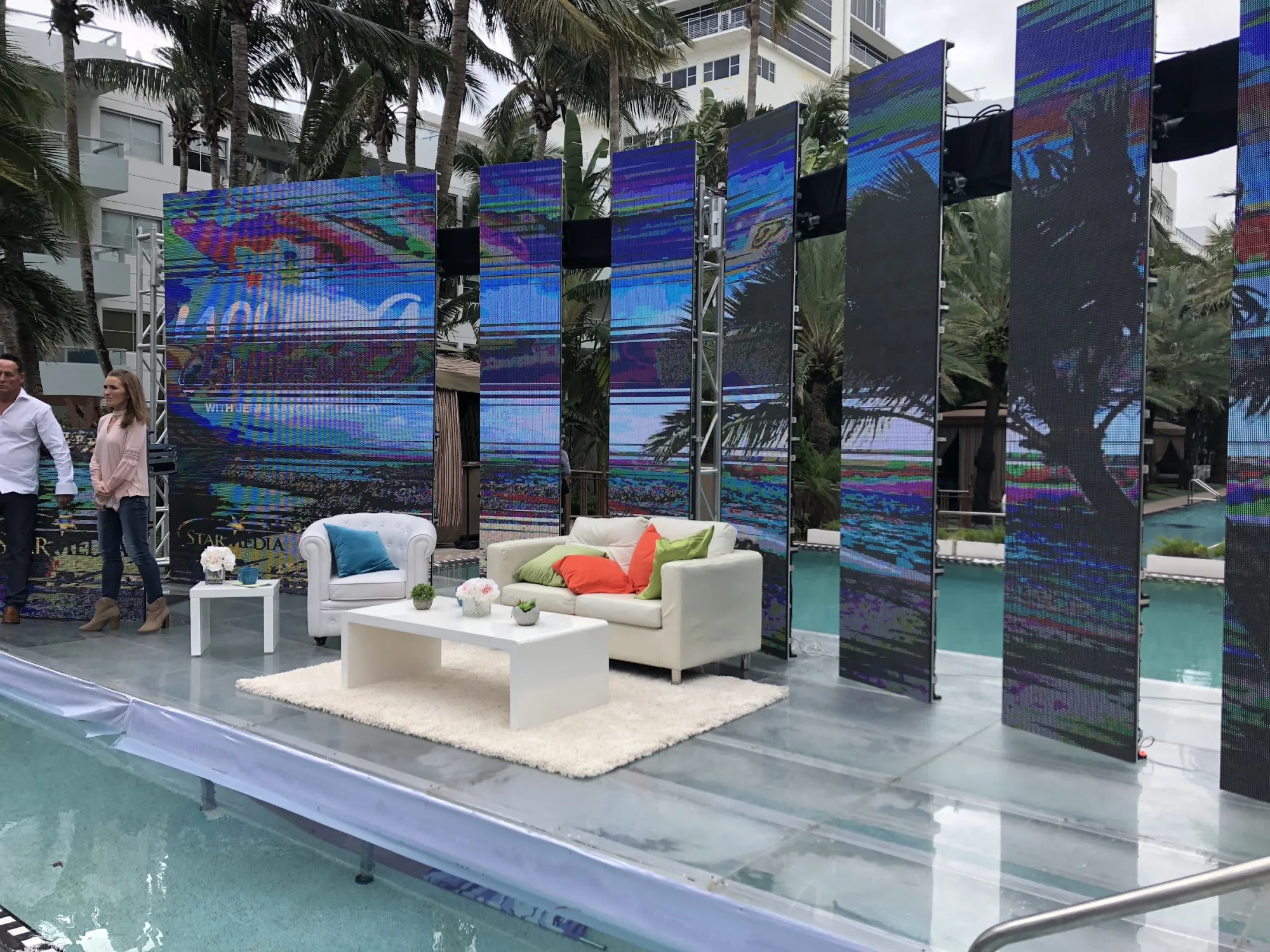
Ask where the wall will sit relative to the water, which way the wind usually blows off the ocean at that hour, and whether the hotel or the city needs paperwork for a structure on the sand or the pool deck. Our pages on LED walls in Miami Beach and LED walls in Fort Lauderdale cover the beach hotels, marinas and docks there.
Where Does the Power Come From Outdoors?
Either the venue's house power or a generator, and the answer has to be settled before the quote, not on the day. A wall, its processor, the sound system and the stage lights all draw at once, so the supply has to cover the whole show, not the screen alone. We confirm house power or plan for a generator for every outdoor wall.
- House power: where the outlets or panel are, how far from the stage, and what else shares them, such as catering or a bar.
- A generator: sized for everything that runs on it, with fuel for the full day, set away from guests and exits so exhaust and noise stay off the crowd.
- The run between: cables raised or covered with ramps where people walk, and joints kept off wet ground.
Which Way Should an Outdoor LED Wall Face?
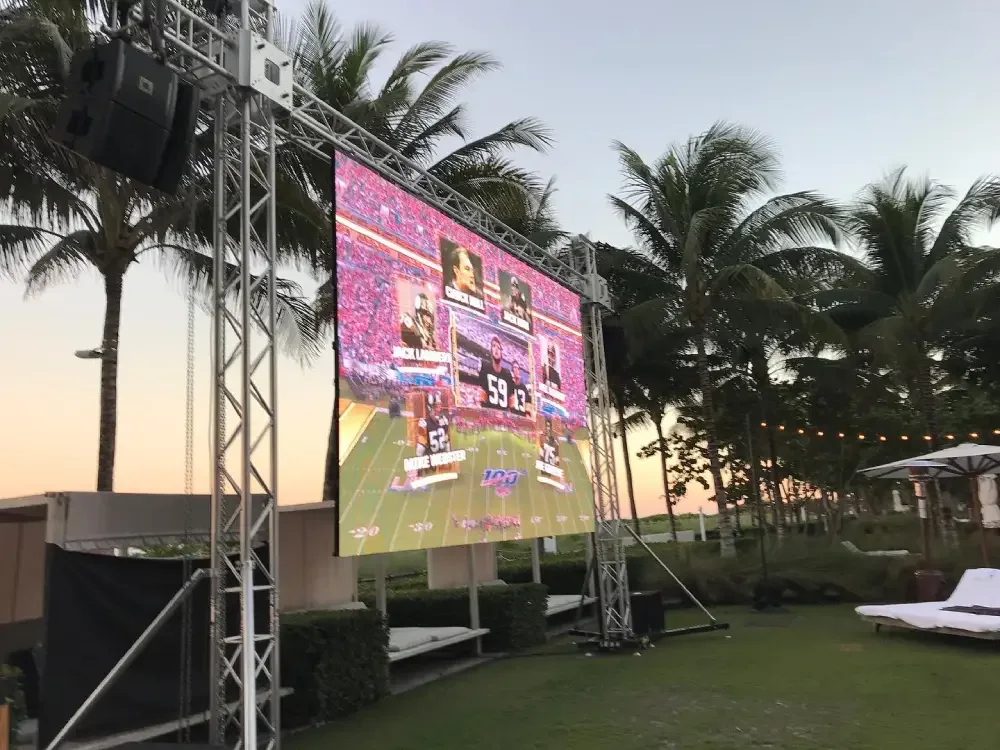
Ideally with the sun behind the wall or off to one side, never shining straight onto its face. A wall facing west takes the low evening sun head on, the exact hour many receptions and concerts start. A wall facing east takes the morning sun for a brunch or a race finish.
The audience matters too. If guests have to look toward the sun to see the screen, no panel is bright enough to help. We look at where the sun will be during your program before we place the wall, using the date, the hours and the site plan. Water and glass towers can bounce a second sun onto the panels, so it pays to check what sits across from the wall too. Our West Palm Beach LED wall page walks through how this works along the waterfront there.
How Does Florida Heat Affect the Crew and the Gear?
A dark cabinet in direct sun gets far hotter than the air around it, and ROE Visual notes that sustained high heat can cause heat problems in the panels. The processor and playback machine fare worse, so they belong in shade with air moving around them.
Heat is a crew problem first. A summer build on an open lawn means water, shade, rest breaks and a schedule that puts the heavy lifting in the cooler morning hours when the venue allows it. Ask how long the build takes, so you know when the crew needs access and whether the wall will be up before the hottest part of the day.
What Does Weather Planning Add to an Outdoor LED Wall Rental Quote?
Outdoor work changes the panels, the structure and the hours. Daylight panels, ground support or roof rigging, ballast, a generator, extra crew for a fast cover or strike, and standby time on a storm day can all show up as lines on the quote. Our post on what drives the cost of an LED video wall rental breaks those lines down. Ask what happens to the cost if weather stops the show, before you sign.
Google review
“Led wall looked great and the staff was amazing. We had 400 attendees at our event and everyone loved the sound and presentations.”
To start, send us four facts: the date, the site, the hours the wall runs and what will play on it. With those we can tell you where the sun will be, how the wall should stand and what the power plan looks like. Read more on our LED wall rental page, or send us your date.
Quick Answers
Can an LED wall be used outside during the day?
Yes, with panels made for daylight and a placement that keeps the sun off the face of the wall. An indoor panel will look gray in Florida sun.
Will a projector work outside in daylight?
Rarely well. The sun lights the projection screen more strongly than the projector does, so the picture washes out until it gets dark. An LED wall makes its own light.
Are outdoor LED screens waterproof?
Outdoor panels are sealed and carry an IP rating; LED maker ROE Visual recommends IP65 or higher outside. The processor, cables and power boxes still need cover.
How long after thunder can an outdoor show restart?
The National Weather Service says to stay in safe shelter at least 30 minutes after the last thunder you hear.
Does an outdoor LED wall need a generator?
Only if the venue's house power cannot carry the wall plus the rest of the show. We confirm house power or plan for a generator before we quote.
Is a wall under a stage roof safe from the weather?
A roof keeps direct rain off. Wind still blows through open sides, and a roof is not lightning shelter, so the wind and lightning plans still apply.