TL;DR
- Decide before the wedding which moments need both languages. Most need only a short line in the second one.
- Names go on the questionnaire spelled the way the family says them, and get checked out loud on the call with your DJ.
- A toast stays in the language the speaker loves. The host bridges it with one sentence, not a full translation.
- Ask to hear the DJ in Spanish before you sign, and read reviews for the words "English and Spanish," not just "great music."
A bilingual wedding DJ in Miami is not a luxury add on. In a city where the bride's tías grew up in Havana or Caracas and the groom's roommates grew up in Ohio, the microphone is the one thing every guest has to share, and whoever holds it sets the tone for both families.
We are a family owned production company based in Miami, and we have hosted a lot of these rooms. This guide covers what changes when the night runs in two languages: the announcements, the names, the toasts, the music and the traditions, plus how to check that the DJ you hire can really do it.
What Does a Bilingual Wedding DJ in Miami Actually Do?
A bilingual wedding DJ plays the music and also hosts the night in English and Spanish, so the grand entrance, the dances, the toasts and the last call reach everyone in the room. Playing reggaeton is not the same skill. Plenty of DJs can mix Latin music; fewer can stand in front of two hundred people and speak naturally to both halves of the family.
The job splits into three parts. First, language planning: deciding, with you, which moments need Spanish, which need English and which need both. Second, delivery: saying it warmly, briefly and with the right pronunciation. Third, the music, which has to keep moving between generations and countries without anyone feeling the night was planned for someone else.
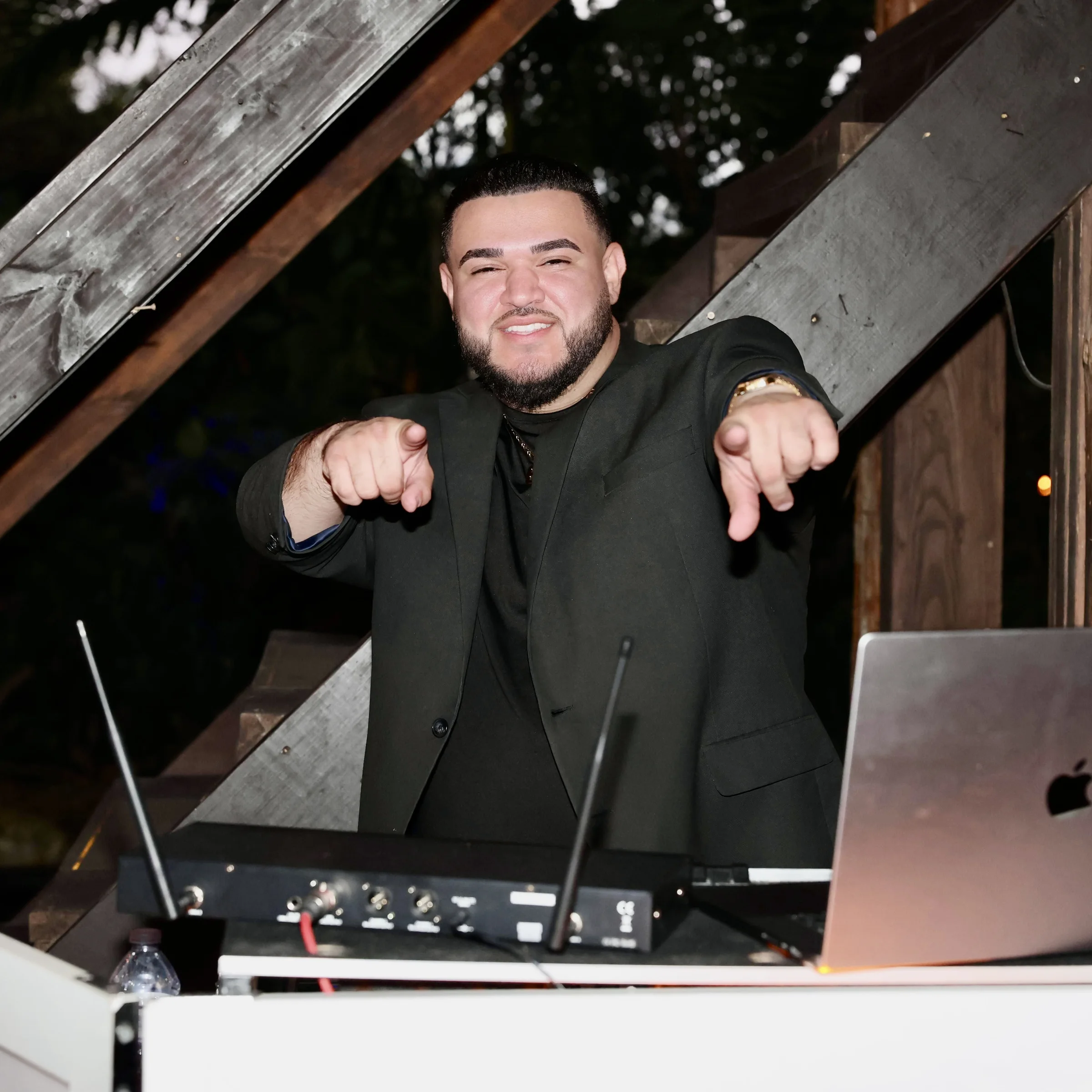
On our roster, DJ Homer, DJ ROBCANO, DJ Jose and DJ GIO host in both English and Spanish. If your family needs a Spanish speaking host, tell us when you ask for a quote so we can match your date to one of the four. Our MC services page explains the hosting side in more detail, and our DJ services page covers the music, sound and booth.
How Do You Announce in English and Spanish Without Doubling Every Moment?
You pick a lead language for the night, give each announcement in that language, and add one short bridge line in the other. Repeating every sentence word for word turns a four minute block of introductions into eight, and guests stop listening by the second round.
Here is how we think about it, moment by moment:
- The welcome.Both languages, in full, because it sets the rule for the rest of the night. Something like: "Good evening, everyone, and welcome. Buenas noches a todos, y bienvenidos." After that, guests know they will be included.
- The grand entrance.One short bilingual setup, then names said once. A name does not need translating; it needs to be said correctly.
- Instructions guests must act on.Dinner by table, the photo line, the send off, the shuttle. Both languages, every time, because a guest who misses these is standing in the wrong place.
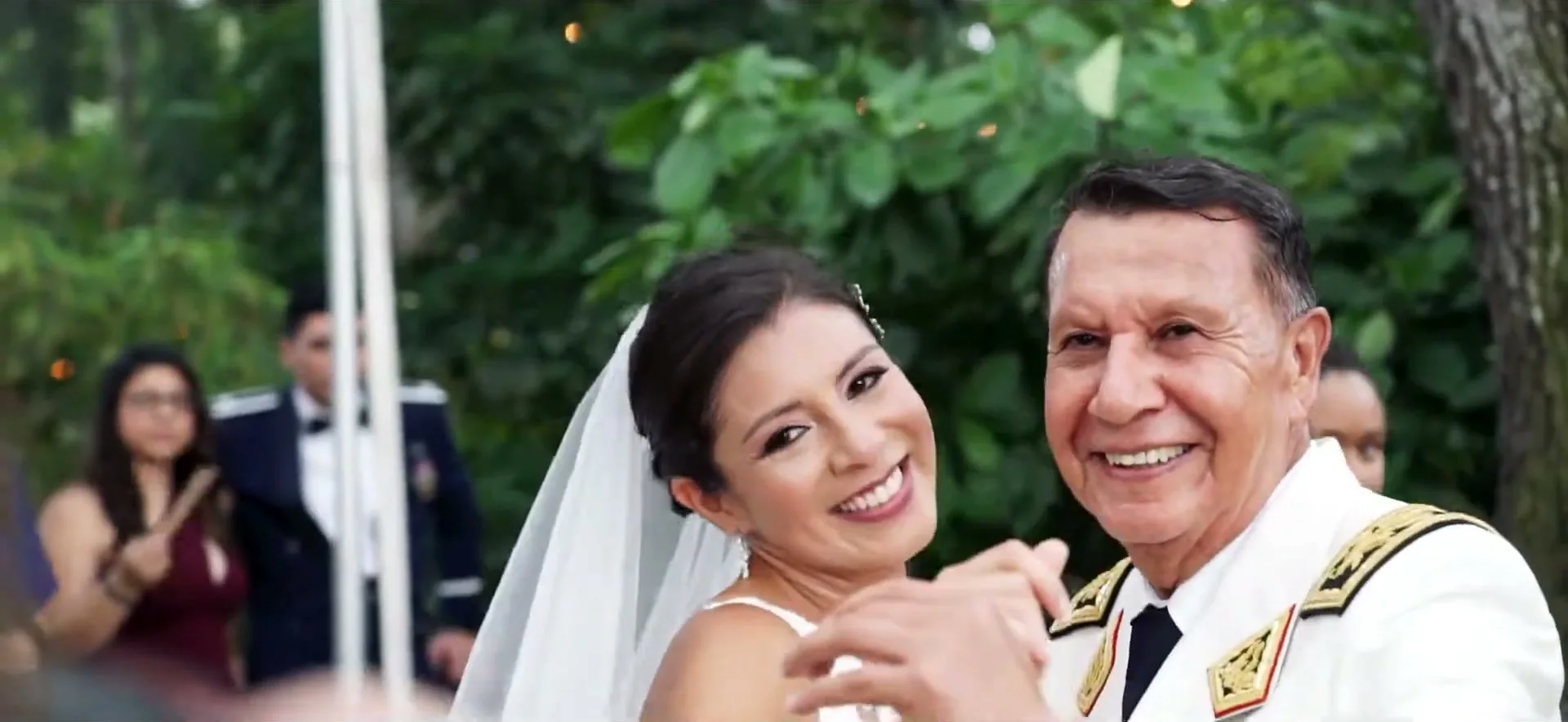
- Formal dances.Introduce in both, then let the song speak. "Please welcome the bride and her father. Con ustedes, la novia y su papá." Nobody needs a translation of a father and daughter dance.
- Calls to the dance floor.Switch languages naturally from one call to the next instead of repeating the same invitation twice. That is where a host who is fluent in both sounds different from one reading a card.
Your coordinator, if you have one, runs the timeline, and we follow it. We plan the language of each cue with them so the microphone never contradicts the schedule.
 Google review
“Brandon (DJ Homer) was an amazing DJ who delivered the energy we wanted! Our crew is a dance-y group and boy did we dance! Brandon MC-ed the night flawlessly switching between English and Spanish and helped us stay on track to have all the fun we planned for. We didn't have the chance to take many photos with vendors and were happy to get one with our very own DJ Homer!”
Why Does Name Pronunciation Matter So Much at a Bilingual Wedding?
Because a mispronounced name is the one mistake every guest hears and every family remembers. In Miami, a single wedding party can hold two surnames per person, accents that change the sound of a name, nicknames nobody outside the family uses, and godparents who expect to be introduced with their titles.
A few things we ask couples to write down:
- Each name the way the family says it, with a note on stress if it is not obvious. The accent mark in Ramírez or Martínez tells you which syllable to stress, and a host who ignores it changes the sound of the name.
- Whether a person uses one surname or both, and in which order.
- Who wants a Spanish pronunciation and who prefers the English one. Families often differ, even siblings.
- Titles that matter to the family: padrinos, madrina, abuelos, or simply "Uncle Ray."
- How you want to be announced together. "Mr. and Mrs." in English and "los recién casados" or "esposo y esposa" in Spanish are both common; pick what sounds like you.
All of it goes on the questionnaire you send us two weeks before the wedding. Then we set a call with your DJ to go over the plan, and that call is where we say every name out loud and let you correct us. A voice note from a parent works well for the hardest ones.
What Happens When a Toast Is in Only One Language?
Let it stay that way. A grandfather who toasts in Spanish should speak in Spanish, and the groom's oldest friend should not be asked to read a translated speech he does not feel. What the host adds is a bridge: one sentence before or after, in the other language, so everyone knows what they just heard.
For example, after a Spanish brindis: "For those who do not speak Spanish, he just welcomed Michael into the family and told everyone the story of their first fishing trip." That takes ten seconds and keeps half the room from feeling left out. Translating line by line, in contrast, drains the emotion out of both versions.
Three planning tips for the toast block:
- Tell us who is speaking and in which language, so we know where the bridge lines go.
- Keep the list short. Three or four speakers is plenty; a bilingual room tires faster when the speeches run long.
- If a speaker plans to switch languages mid toast, let us know, so we stay quiet and let them do it.
If one family speaks almost no English or almost no Spanish, some couples also bring a relative to sit with the grandparents and whisper the gist of the toasts. That is a family decision, and it works well alongside a bilingual host.
How Does a DJ Read Which Music Lands for Which Side of the Room?
By watching who gets up, not by following a list. Salsa and merengue tend to pull the older relatives and the dancers who grew up with them; bachata brings couples; reggaeton and Latin pop fill the floor with the cousins; English classics and Top 40 bring the college friends and coworkers. A good set moves between them in short runs, so no group sits out for half an hour.
Countries matter too. A Cuban family, a Colombian family and a Puerto Rican family will not ask for the same songs, and a cumbia that empties one floor will fill another. Tell us on the questionnaire where both families come from, and list the songs that must play and the ones that must not. Our DJs take requests and read the crowd, and your do not play list still wins.
“…We worked with DJ Homer before our wedding to discuss some music choices, as we wanted to have some cultural music played, but not 100% of the time. Our main priority was to get people dancing throughout the night. He listened to what kind of music we wanted to hear, but we placed our trust in DJ Homer. The music and timing throughout the night was SPOT ON!…”
That balance, some cultural music but not all of it, is the most common request we hear. The other one is range across ages, which a couple described this way:
“…Brandon was a hit on the dj booth playing all types of music the crowd would enjoy, from bad bunny to lionel ritchie and all of the above…”
Where Do Hora Loca and Family Traditions Fit in a Bilingual Night?
They fit wherever you put them on the timeline, and a host who speaks both languages is what lets the whole room understand them. A tradition that half the guests have never seen needs a sentence of explanation in English; the same tradition needs no explanation at all for the abuelos, just the right song and the right cue.
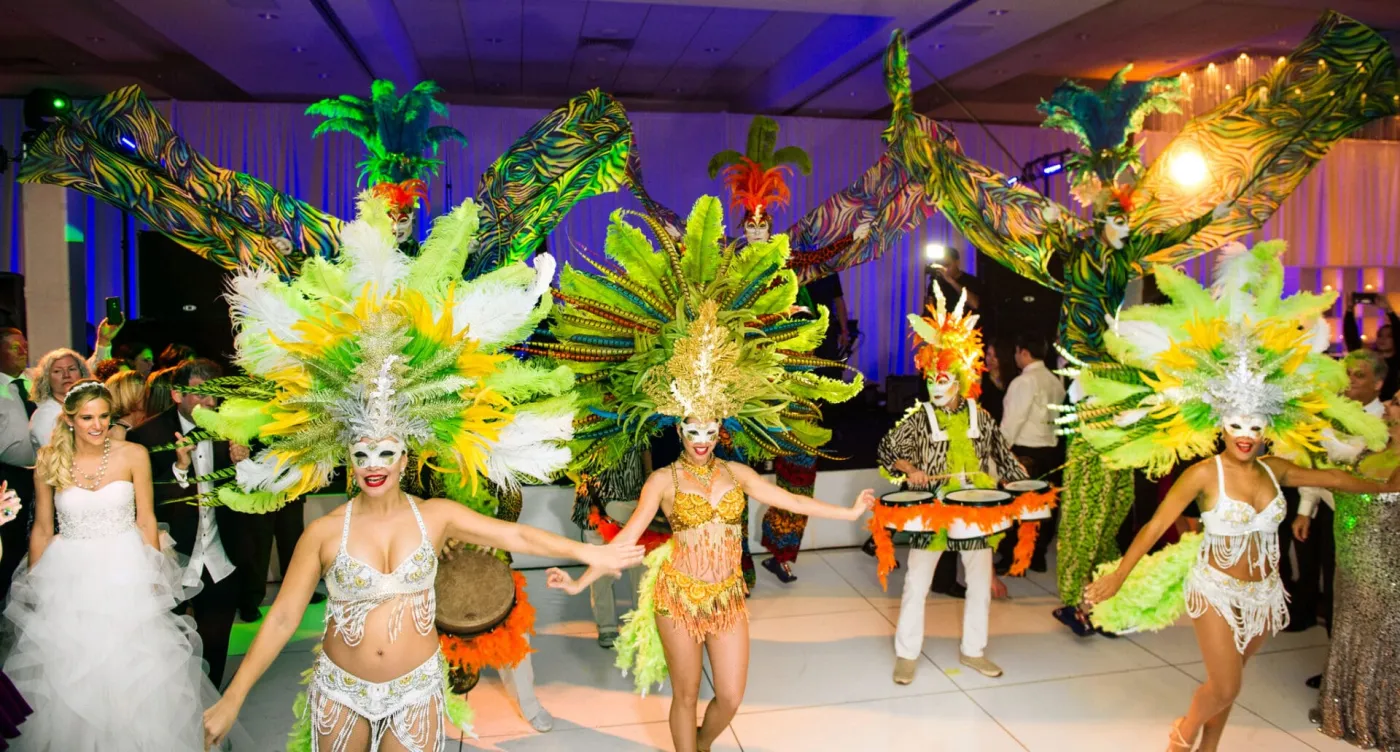
The one we run most often is the hora loca, usually after dinner and the formal dances, when the floor needs a second wind. The music changes, costumed performers come through the room, and our DJ cues the whole thing so the songs, the lights and the performers move together. You can read how we put it together on our Hora Loca and Live Entertainers page.
Beyond that, every family has its own moments, and we would rather you tell us than assume. Ask your DJ about any of these that matter to you:
- A lazo or other ceremony custom that needs a music cue or a microphone.
- A money dance, and whether the family wants it announced or kept low key.
- A blessing before dinner, and who gives it, in which language.
- Introducing the padrinos or godparents by name during the entrance.
- A song for a relative who has passed, and whether to say their name.
- A song from the family's home country that everyone over sixty will stand up for.
Couples mix traditions that have nothing to do with Spanish, too. One couple described their wedding this way:
Google review
“They worked with us on every aspect and detail as our Wedding was a bit different (mixing of American, Irish and Albanian traditions and music).”
How Can You Tell a DJ Is Really Bilingual Before You Book?
Hear it yourself. A website that says "bilingual" tells you the company has someone who speaks Spanish; it does not tell you whether that person will be at your wedding or whether they can host, not just chat.
- Ask who will be on the microphone, by name.Then ask whether that person hosts in both languages. With us, the answer for Spanish speaking hosts is DJ Homer, DJ ROBCANO, DJ Jose or DJ GIO, depending on your date.
- Talk to them in Spanish.Switch languages on the phone for a minute. You will hear right away whether it is natural.
- Ask for a sample announcement with your names.A short grand entrance in both languages, using your real names, tells you more than a highlight video.
- Search the reviews for specific words."English and Spanish," "bilingual," "announcements," "names." A review that says the MC switched languages is worth more than ten that say the music was great.
- Ask how they handle toasts.If the answer is "we translate everything," expect a long night. If the answer is a plan, you have found a host.
For more questions to bring to that call, from hours to the contract, see our guide on questions to ask before booking a wedding DJ in Miami.
Hosting a Bilingual Wedding in Miami or Hialeah
The language mix changes from room to room. A Brickell hotel ballroom may hold a guest list that leans English with grandparents who prefer Spanish; a banquet hall in Hialeah may be the reverse, with Spanish as the lead language and a few English lines for the groom's coworkers. We plan the lead language around your guest list, not the zip code.
For the local side of it, see our pages on a bilingual MC in Miami and DJ services in Miami, or, next door to our Miami base, a bilingual MC in Hialeah and DJ services in Hialeah. Our weddings page shows the whole day, from ceremony sound to the last dance.
When you are ready, send us your date and venue and tell us roughly how your guests split between English and Spanish. We will reply with a plan and a quote.
Quick Answers
Do I need a bilingual wedding DJ if most guests speak English?
If even one table of grandparents prefers Spanish, a host who can speak to them directly changes their night. You do not need every line in both languages; you need the right ones.
Is the bilingual DJ also the MC?
Often, yes. Ask whether the same person plays the music and holds the microphone. With us, DJ Homer, DJ ROBCANO, DJ Jose and DJ GIO do both, in English and Spanish.
Should toasts be translated?
Not word for word. Let each speaker use their own language, and have the host add one short summary line in the other.
How do we make sure names are said correctly?
Spell them the way the family says them on the questionnaire, mark the stressed syllable on hard ones, and go over them out loud on the call with your DJ before the wedding.
Does a bilingual DJ cost more?
The price for any wedding DJ comes from your hours, the venue, lighting, live performers and which DJ you want. Ask whether bilingual hosting is already in the quote, so you can compare quotes fairly.
What is a hora loca?
Spanish for crazy hour: a burst of costumed performers, props and fast music late in the reception. See our Hora Loca and Live Entertainers page.