TL;DR
- Ceremony sound has three jobs: let every row hear the officiant and the vows, play the right song at the right step, and stay quiet when nobody is speaking.
- Out in the Redland the ceremony spot is often a long walk from any outlet, so settle power before anything else.
- Wind on open farmland eats speech. Microphone choice and where the speakers stand matter more than volume.
- Plan where the gear sits in the afternoon sun, what happens when a storm rolls in, and who moves the sound to cocktail hour.
Wedding ceremony audio in Homestead is a different job from sound in a hotel ballroom. The prettiest spots in the far south of Miami Dade County are fruit groves, plant nurseries, private estates, ranches and walled gardens in the Redland, and most of them were built for growing things, not for amplifying a voice across a lawn.
We are a family owned production company based in Miami, and the drive down Krome Avenue or the Turnpike takes real time, so we plan these ceremonies before we load the van. This guide walks through the questions we ask for a south Dade ceremony, and the ones you should ask whoever runs your sound.
What Does Wedding Ceremony Audio in Homestead Need to Cover?
It needs to cover every voice and every song from the moment guests sit down to the moment you walk back up the aisle. That is usually five things: music while guests arrive, the processional, the officiant, the vows and readings, and the recessional.
Couples often picture only the music. The part guests remember is whether they heard you say the words. A full event sound system for the reception does not automatically reach the ceremony spot, which on a farm property may sit across a field or behind a hedge from the dinner tables. One wedding Eddy described from our own work had a violinist playing through a small speaker on a tripod stand, a microphone on the officiant, and a second, matching speaker waiting at cocktail hour without the microphone. That is a typical shape for an outdoor ceremony: small, separate and placed where the people are.
In our standard wedding day the first hour covers guest arrival and the ceremony, the second covers cocktails, and four more cover the reception. The ceremony is the shortest stretch of the day and the one with no second take.
What Makes a Redland Farm or Estate Ceremony Different?
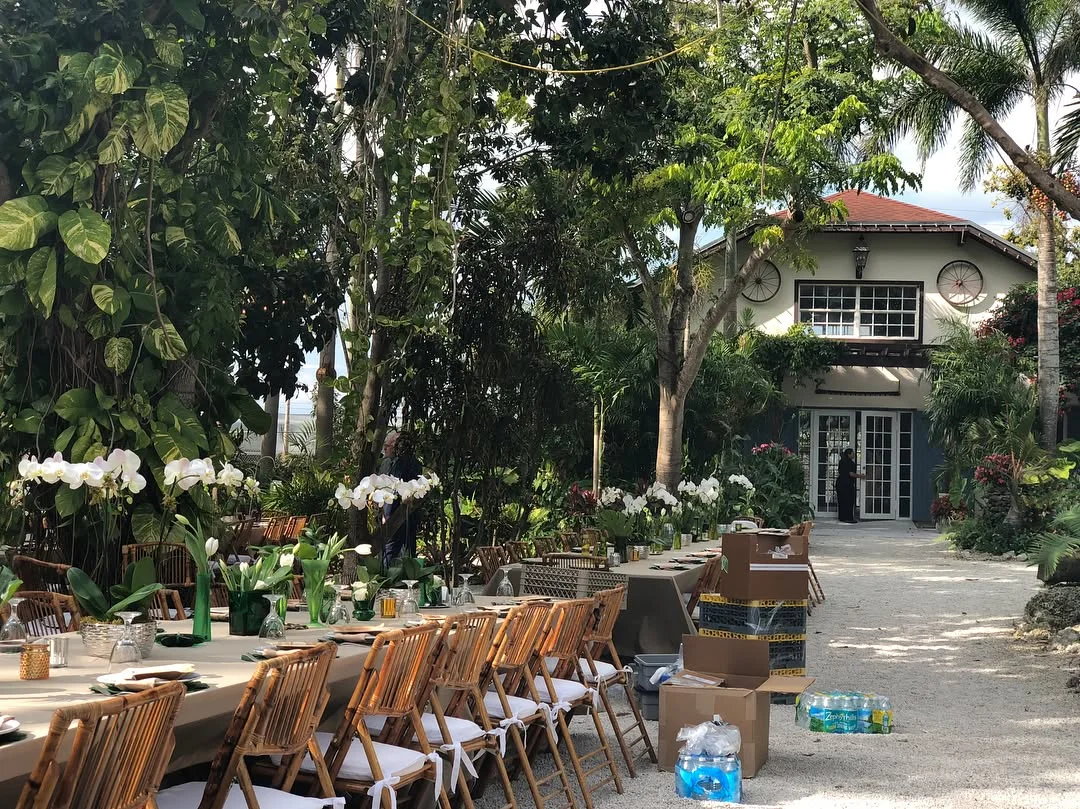
Distance, open air and very little built in. A downtown venue hands you walls, a ceiling and a wall outlet every few feet. A grove or a nursery hands you rows of trees, a gravel path and a single power point back by the barn or the main house.
The venue types you will find around Homestead, Florida City and the Redland each bring their own sound problem:
- Fruit groves and working farmsLong aisles under trees, soft ground, and guests spread wide. Speakers need stands that sit level on grass or gravel, and cable needs a covered path where people walk.
- Nurseries and botanical gardensHedges and plant beds break up sound in useful ways and in annoying ones. A hedge behind the arch can block wind; a hedge between the speakers and the back rows can swallow the vows.
- Estates and walled villasCourtyards and lawns close to the house usually mean shorter power runs, but rules for where vendors park and unload can be strict.
- Ranches and open fieldsThe most room and the most wind. Everything has to be carried in, and the nearest outlet may be a long way off.
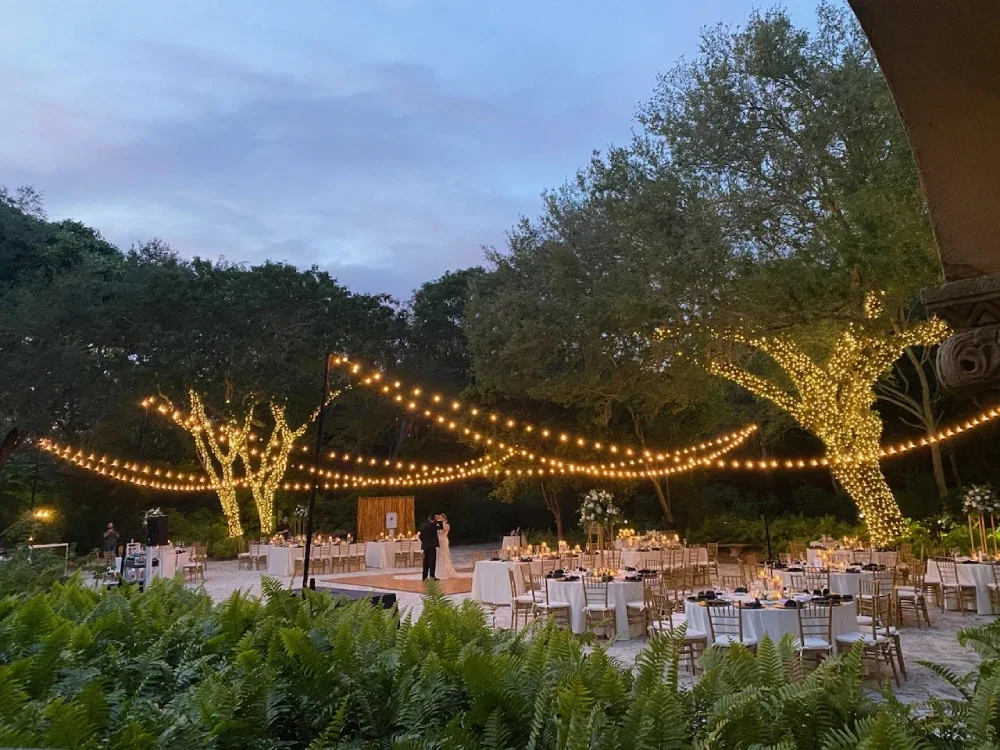
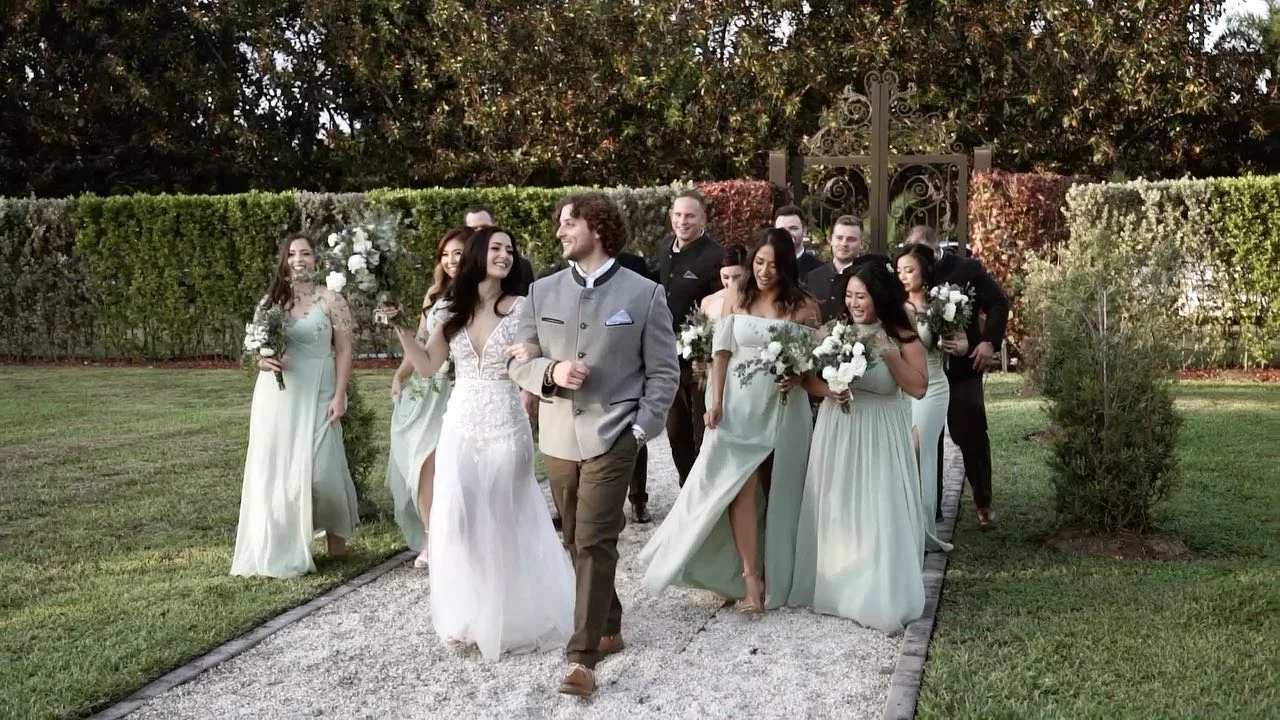
We have worked weddings in this part of the county. Our Instagram shows a wedding at Villa Toscana in the Redland with our bistro lights, DJ and photo booth, a ranch wedding in South Dade with one of our DJs, and a film on our YouTube channel of Andrew and Yoli's wedding in Homestead, held at Cinco Farm, where we were part of the vendor team. If your venue is new to us, we ask the venue manager for a site map and the power locations before we quote.
 Google review
“Edward and his team did an amazing job making our day special. Even two months later we are still receiving complements about the bistro lights and up-lighting that set the tone for the whole night. He really took our vision and made it a reality without breaking our budget - something we thought would be impossible! SoFlo Main events went above and beyond to make sure everything from the ceremony AV to DJ to the photo booth were absolutely perfect. I would highly recommend them to any bride and groom to be.”
Which Microphones Should the Officiant and Couple Use?
For most outdoor ceremonies, a wireless lavalier on the officiant plus a wireless handheld for readers works well. The lavalier clips to a lapel or a stole and leaves the officiant's hands free for a book or the rings. The handheld goes to whoever reads, sings or gives a blessing.
The vows are the tricky part. If you face each other a step or two from the officiant, a lapel microphone on the officiant may catch your voices only faintly. There are three common fixes, and you should ask which one your sound company prefers:
- The officiant holds the handheld toward each of you as you repeat the vows.
- A microphone on a low stand sits between you, angled so it does not block photos.
- One of you wears a second lavalier hidden in the jacket.
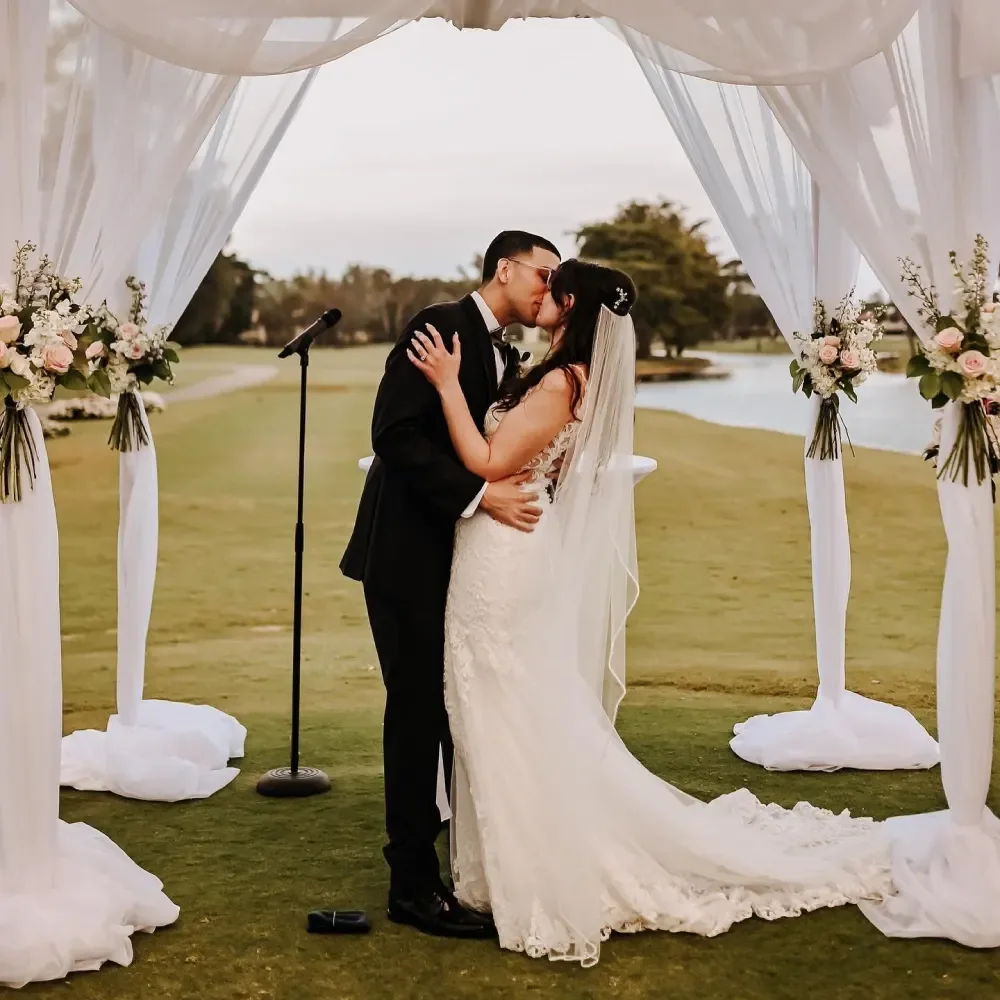
We bring wireless handheld and lavalier microphones and fit each one to the person who will use it. Our page on microphones and presentation audio explains how we match a microphone to a speaker in more detail.
How Do You Keep Wind From Taking the Vows?
You keep the microphone close to the mouth, cover it, and put the speakers where the guests are instead of where the outlet is. Turning the volume up is the last resort, because it brings feedback and wind rumble up with it.
Open farmland south of the city can be calm at noon and gusty by late afternoon, which is when most ceremonies start. A few habits help:
- Foam covers on every microphone, and a lavalier clipped where the jacket shields it.
- Speakers in front of the officiant, aimed at the seats, so the microphone never points into them.
- A speaker pair placed partway down a long aisle when the back rows sit far from the arch.
- A sound check at the ceremony spot close to the real start time, when the wind is doing what it will do during the vows.
If your coordinator can turn the chairs so the breeze comes from behind the guests, voices carry toward them rather than away. That one choice can do more than any piece of gear.
Where Does the Power Come From Out on the Property?
Ask this first, because the answer changes everything else on the list. Many farm and garden venues have power near the main building and none at the ceremony spot.
There are three usual answers, and each one has follow up questions:
- A venue outlet within reachAsk how far it is from the arch, what else shares that circuit (catering often does), and whether cable can cross the aisle or must go around it under a mat.
- A generatorAsk who supplies it, who fuels it, and where it will sit. It belongs far from the guests and the microphones, downwind, and away from the photographer's angles. Many venues have their own rules about generators, so ask the venue manager before anyone rents one.
- Battery powered gearAsk how long it runs, whether there are spares, and what happens if the ceremony starts late in the heat.
Tell us what your venue has when you ask for a quote. We confirm the power plan for your date and your spot before the day, so nobody is hunting for an outlet with guests already seated.
Not sure what your venue offers? Send us the venue name and the ceremony spot and we will start from there.
Who Cues the Processional and the Recessional?
One person should own the music cues, and everyone else should know who that is. In most weddings that is the DJ, taking the signal from your coordinator. When you have a coordinator, they are the lead voice of the day, and we follow their timeline.
Write the order down: prelude music while guests sit, a song for the wedding party, a separate song for the entrance of the bride or the couple, any music during a unity ritual, and the recessional. Note where each song should start and where it can fade, because a long aisle on a farm path takes longer to walk than the rehearsal hallway did.
If live players are part of the ceremony, decide who cues them and how. A nod from the coordinator works; so does a quiet word from the DJ. Our live musicians page covers how a violinist or a guitarist fits into the same sound plan, and our DJ services page explains how our DJs run the music from ceremony through the last dance.
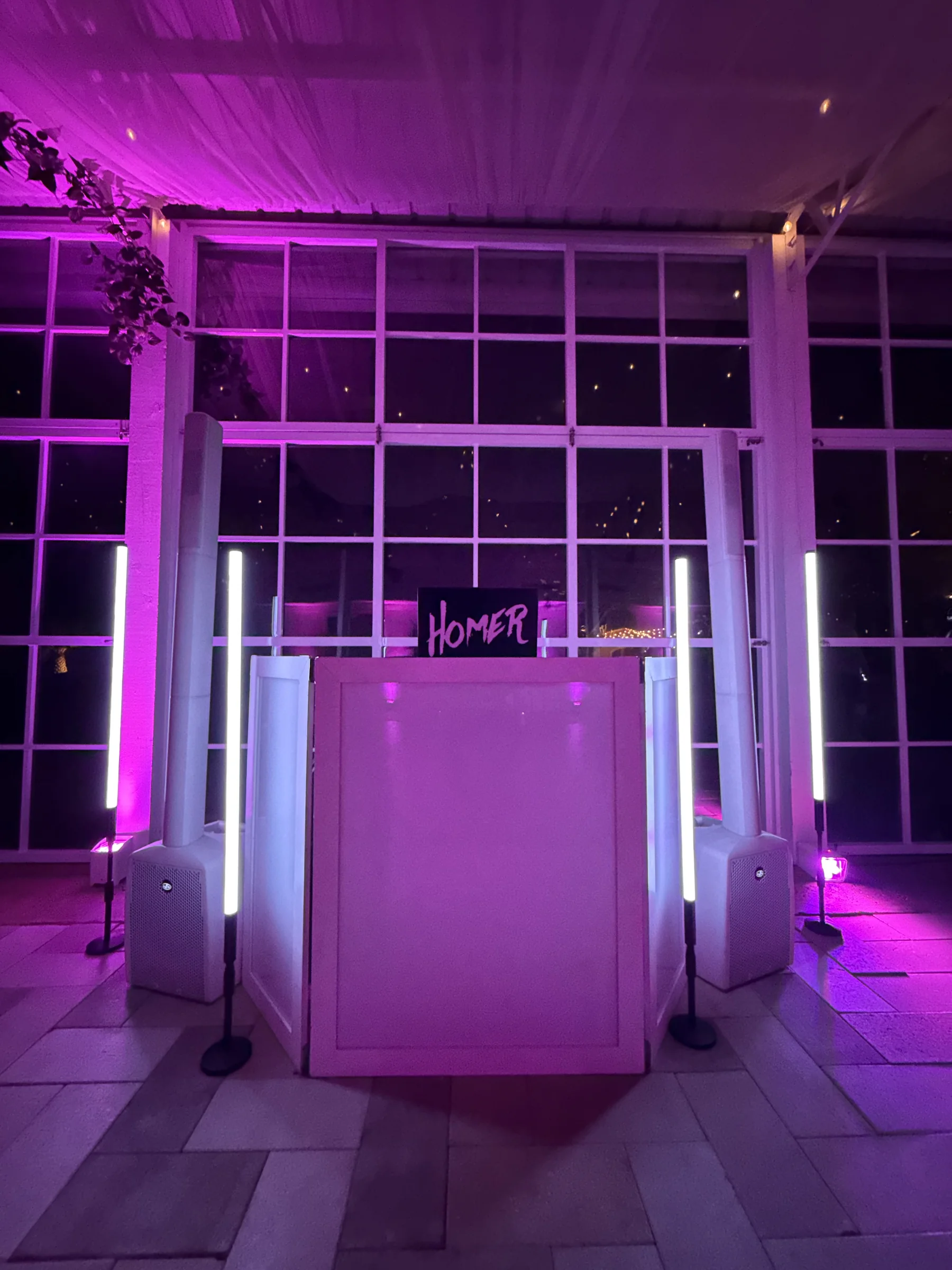
With us, your questionnaire is due two weeks before the wedding, and it carries every ceremony song and cue. After it is in, we set a call with your DJ to walk through it.
What About Heat, Rain and the Walk to the Reception?
Plan for all three, because a south Dade afternoon can bring all three. Hurricane season runs June 1 to November 30, and summer storms can build quickly over the farmland.
- Heat: ask where the mixer and the wireless receivers will sit. They should be in shade, not on a table in full sun for two hours before the ceremony.
- Rain: ask the venue where the ceremony moves if it rains, and ask your sound company how fast the gear can follow. A covered porch or a tent needs its own speaker spot.
- The walk: ask who moves the sound from the ceremony to cocktail hour, and how long it takes. On a large property the better answer is often a second small setup already waiting at cocktails, like the cocktail speaker in the wedding Eddy described.
Venue rules and long carries can also mean more crew to finish the setup on time, which is one reason a quote for a farm wedding can differ from a quote for a ballroom.
What Should You Put on the Quote Form?
The more we know about the ceremony spot, the closer the first quote is to the final one. Send us:
- The venue and the exact ceremony spotA grove, a garden, a lawn by the house or a field. A photo or the venue's site map helps.
- Guest count and seating shapeA long aisle and a wide semicircle need different speaker spots.
- Who speaks and who playsOfficiant, readers, anyone singing, and any live musicians.
- Power at the spotAn outlet nearby, a generator, or nothing at all. Tell us what the venue told you.
- The rain planWhere the ceremony moves, and how far that is.
- Distance to cocktails and dinnerSo we can plan whether the sound moves or a second setup waits.
For the rest of the day, our wedding production page shows how ceremony sound joins lighting, the DJ and the photo booth. Getting married closer to the city? See how we work in Miami, and keep an eye on our Homestead page.
Google review
“My fiancé (now husband) and I (now his husband) held our wedding ceremony and reception last April 2018, hiring SoFlo Main Events through our venue’s manager’s referral. What a wise choice!…”
Quick Answers
Do I need a microphone for an outdoor wedding ceremony?
Almost always. Outdoors there are no walls to carry a voice, and wind takes what is left. Even a small ceremony on a farm benefits from a lavalier on the officiant and a speaker facing the seats.
What microphone is used for a wedding ceremony?
Usually a wireless lavalier for the officiant and a wireless handheld for readings and songs. For the vows, add a stand microphone or a second lavalier, or have the officiant hold the handheld toward each of you.
Can the reception DJ also run the ceremony sound?
Yes, and it keeps the music cues in one pair of hands. Ask whether the ceremony gets its own speakers at its own spot, and who moves the sound to cocktail hour.
Can you just rent speakers for a wedding ceremony?
You can, but someone still has to set levels, fit the microphones, start each song and fix feedback while you are at the altar. That is the part a rental alone does not cover.
How many speakers does a ceremony need?
It depends on the guest count, the shape of the seating and the wind more than on a fixed number. A long aisle under trees may need a pair near the back as well as a pair at the front.
What sets the price of wedding ceremony sound?
The number of microphones, whether the ceremony is far from the reception, the power plan, live musicians and how hard the site is to reach. Tell us those on the quote form and we price your day, not a guess.